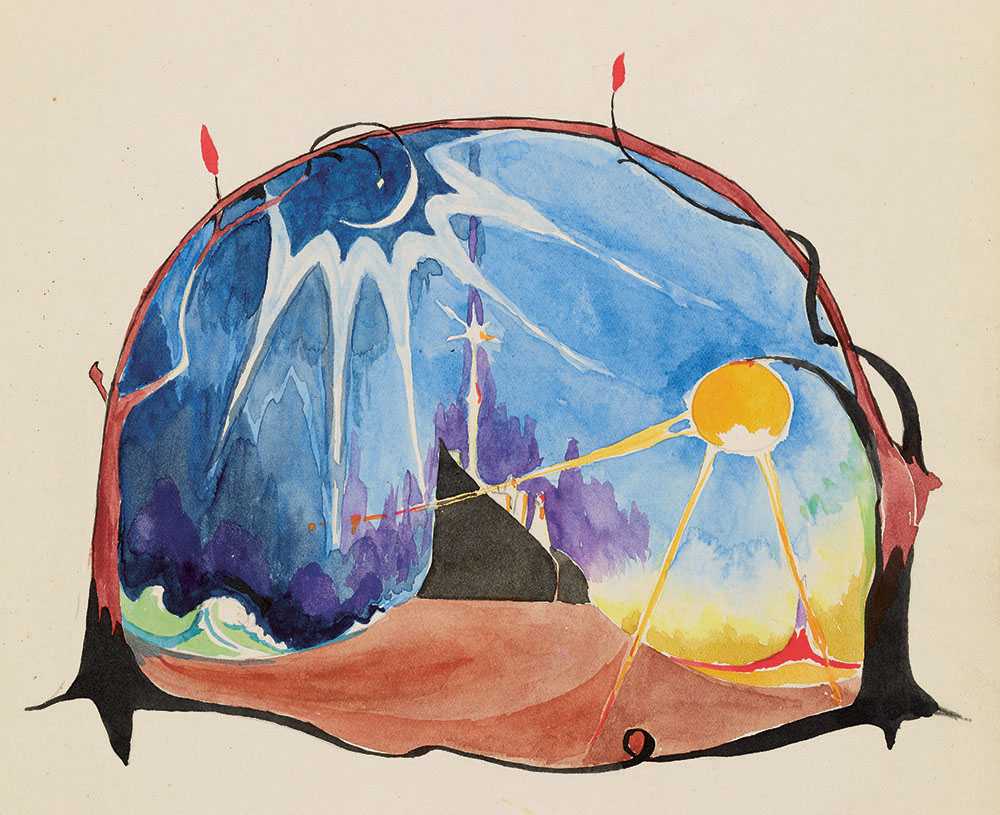
The Shores of Faery, by J. R. R. Tolkien

Actually the question:
What is the origin of the fairy element?
“…there are many elements in fairy-stories (such as this detachable heart, or swan-robes, magic rings, arbitrary prohibitions, wicked stepmothers, and even fairies themselves) that can be studied without tackling this main question. Such studies are, however, scientific (at least in intent); they are the pursuit of folklorists or anthropologists: that is of people using the stories not as they were meant to be used, but as a quarry from which to dig evidence, or information, about matters in which they are interested. A perfectly legitimate procedure in itself—but ignorance or forgetfulness of the nature of a story (as a thing told in its entirety) has often led such inquirers into strange judgements.”
~On Fairy Stories, sec. Origins, J. R. R. Tolkien

In much of this section of Tolkien’s essay he addresses the common occurrence of separate stories being compared to one another in such a way that they are categorized as “the same story” even though they are not and the authors of said stories never intended them to be. So much so that at times this lumping together of stories can be to the individual story’s demise. Ex.—
- Beowolf as a version of Dat Erdmänneken (‘The Earthly Man’ or ‘Gnome’)
- The Black Bull of Norroway is Beauty and the Beast or Eros and Psyche
- The Battle of the Birds (Gaelic) is The Myth of Jason and Madea (Greek)
Most fairy-stories have recognizable themes, characters and storylines to those previously penned and in our pursuit of deduction as humans wandering though life attempting to make sense of everything, it seems to me natural to blend all of these stories together to create some semblance of peace of mind.
Throughout the essay Tolkien speaks on what he refers to as the “Soup” of story and storytelling; the soup being the story as it is told by the author and the bones of the soup being the source material for the story (an element not many eating the soup would request—not everyone wants to see the bones the meat in the soup came off of). The Soup is much like a perpetual stew over a continuous fire and elements (whether original or borrowed) are added to the pot, creating one large “meal” for the readers to digest with familiarity and ease.
Tolkien lists mythology, religion and ancestral heroes as the “bones” of all stories, and is confident that the three things that produce the ‘intricate web of Story’ are: independent invention, inheritance and diffusion, but that inheritance and diffusion must always lead back to invention—the origin of the story—there is always an inventor; an original author of all stories we know.
“To an inventor, that is to a storymaker, the other two must in the end lead back. Diffusion (borrowing in space) whether of an artefact or a story, only refers the problem of origin elsewhere. At the centre of the supposed diffusion there is a place where once an inventor lived. Similarly with inheritance (borrowing in time): in this way we arrive at last only at an ancestral inventor.”
~On Fairy Stories, sec. Origins, J. R. R. Tolkien
On Enchanting the Ordinary
In my last episode—Fairy vs Faërie—we saw that Faërie is the realm in which the enchantment of the ordinary resides. Where magical creatures live and where mortal men may walk when permitted by its residents.
Faërie is where heavy things are made light and able to fly, where grey lead can be turned into gold, and the still rock transformed into a swift running stream. I love Tolkien’s examples given for colors being transformed from mere adjectives into vivid visions of things far grander than the color itself could have ever imagined itself becoming. Stepping into that enchantment and becoming a wordsmith of the ordinary words we learned in “school” is where we, mortal men, become sub-creators in the realm of Faërie.
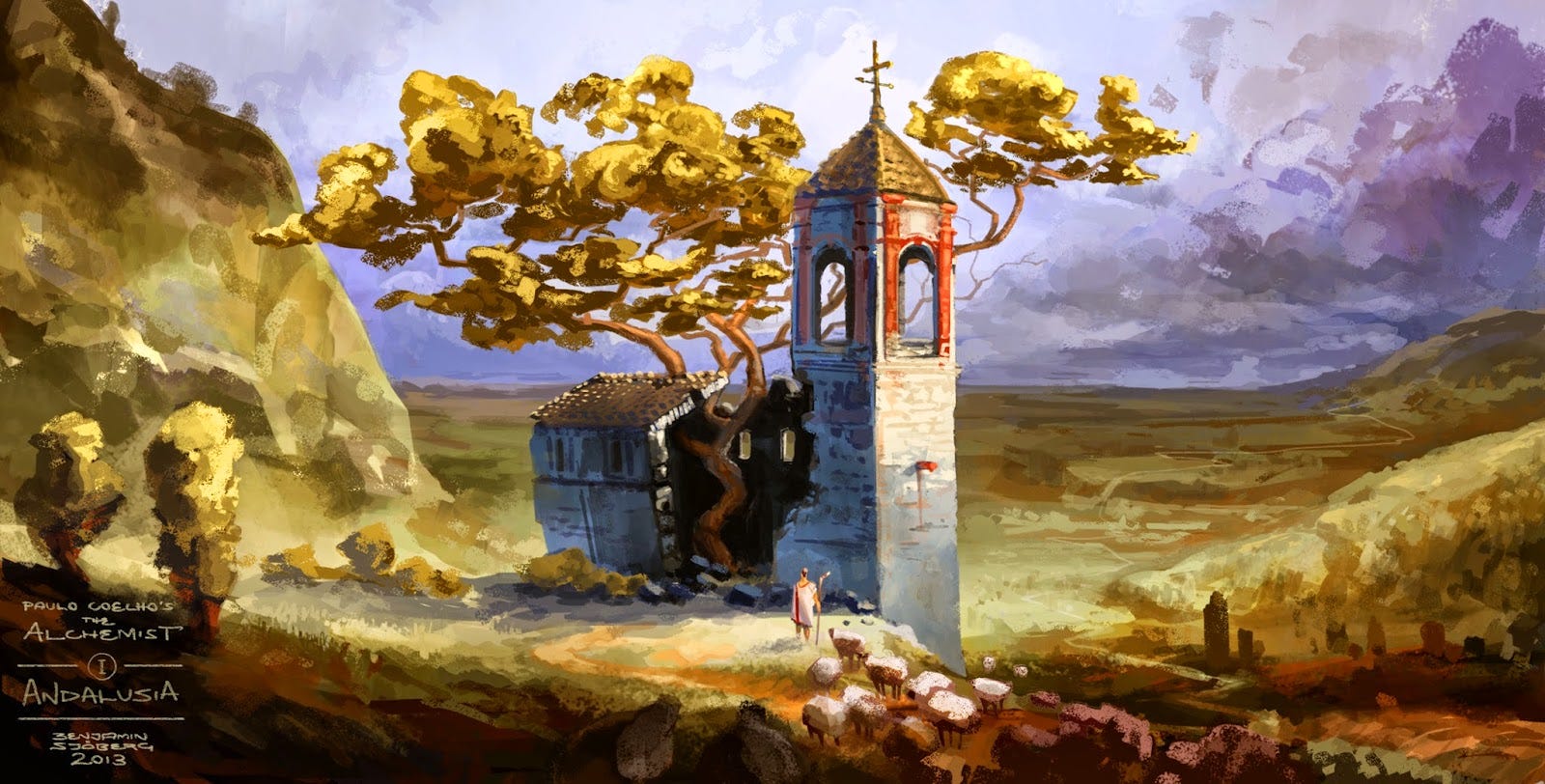
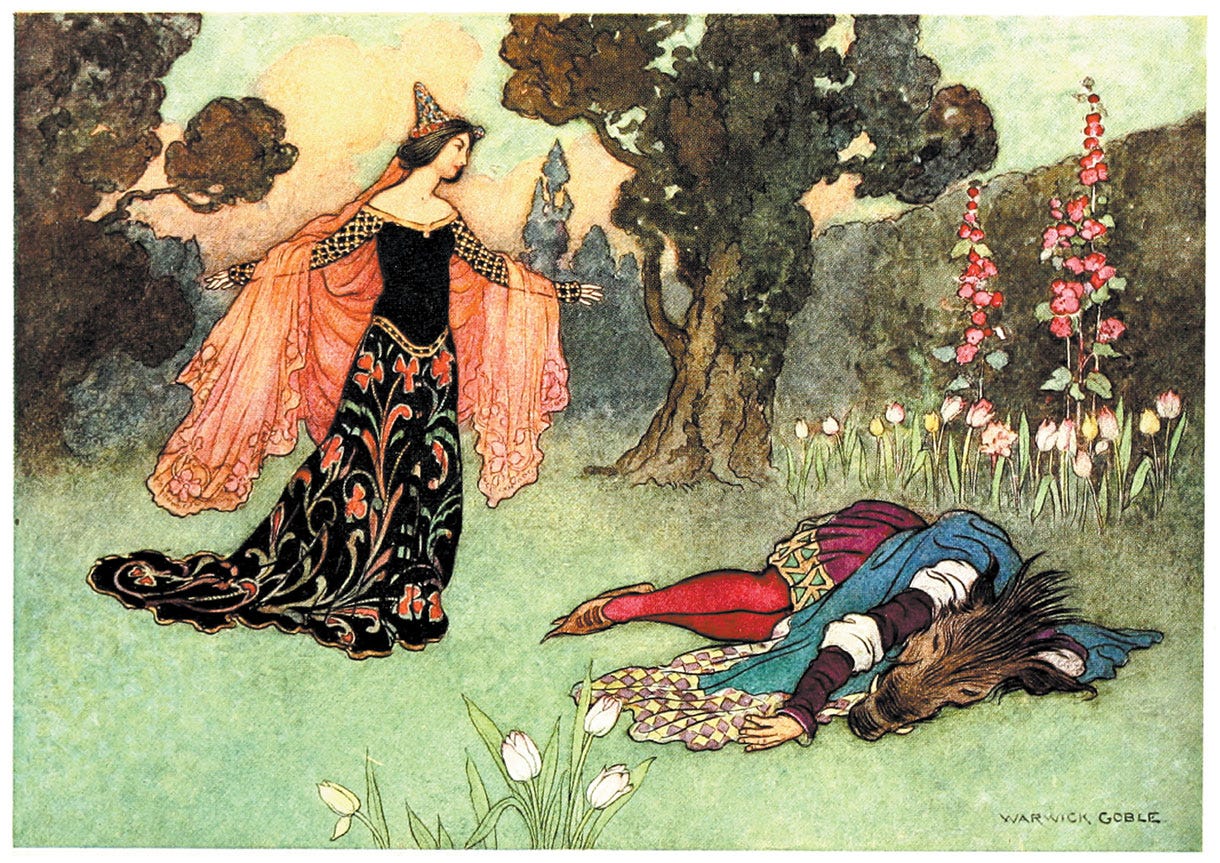
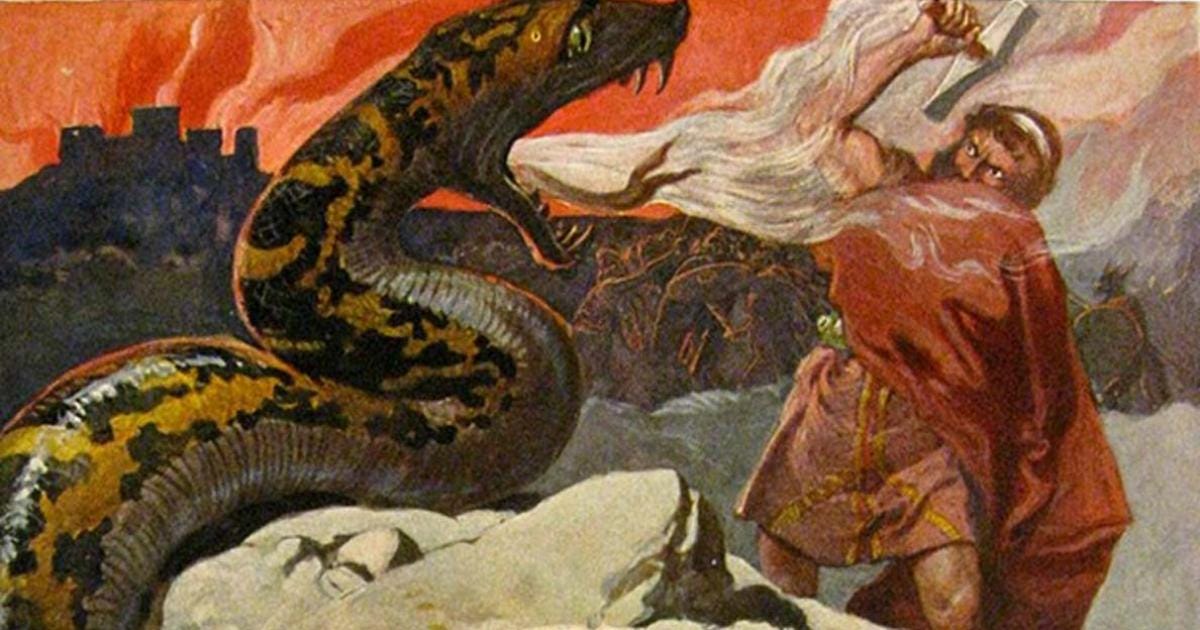
It is here in the essay that Tolkien begins to unravel Mythology and leans heavily into the Norse god of Thunder, Thórr with his Lightning Hammer, Miöllnir. He steps into this particular god, and lists others, but his point in doing so is to illustrate the fact that the characteristics of these gods are visible throughout many stories, and how stories draw from one another in myth, magic and mystery; how these details in stories across time are entangled and, in Tolkien’s opinion shouldn’t be but he accepts them into the Soup of story nonetheless.
Tolkien then dips our toes into Arthur and still speaks on borrowed imagery and mythology in this tale, but as Arthurian legend is added to the Pot, he wraps up these opinions by revealing that in the end, all of these stories, being entangled as they are, serve their purpose by spurring on hope to the ordinary ‘He’ or ‘She’ to step into a new realm and become the hero or heroine they were born to be… a “whosoever will” moment where we are allowed, for a time, to be enchanted and become part of the tale in our own right.
On Comparing Authors Today
As I read Tolkien’s opinions on the mash-up of fairy-stories I couldn’t help but think of all of the discussions (I use that term lightly, as most of the conversations I read online would make Smaug’s fire seem pitiful) about today’s ‘fantasy’ authors and what division it has caused amongst humans who claim to love Faërie, even if they don’t have the full understanding of what it actually is.
When I was a young girl, Saphira got me through some of my hardest days. The abuse I endured as a child from age 4-13 is not for this post, but what I am saying is that this realm that Tolkien speaks of; the realm in which anything is possible is, in my opinion, the most important aspect of its creation. There is a point in which the imagination of the author becomes salvation to the reader.
If I had not believed the tale that was written by Paolini all those decades ago, I don’t imagine I would be ‘okay in the head’ from what I endured in my childhood. If it was not for Peter Jackson taking these stories by Tolkien and turning them into a beacon of hope, I would not have made it through my single-mother years, I am sure of it.
So when I see people bickering online and pitting certain authors against one another, hurling insults that have more impact than Grond at the Great Gate of the White City, I am disappointed in humanity that we cannot simply like what we like, read what we want to read, and allow the author’s words, regardless of what their name is or what one thinks of them, to speak to us and heal us in the intimate, intricate and personal way we need it to.
I was recently in a comment thread where another beautiful soul I was talking to made a great point—love his work or hate it, obviously George R. R. Martin resonated with a large audience, and that’s the point. Each author writes from their heart—their life, their experience, their interests, their passions, their knowledge of invention, inheritance and diffusion—and creates what they feel they must create. And in turn, lives are changed, hope is kindled, and life becomes a little more bearable amongst the flaming stones of war and chaos being hurled over our beautiful garden gate at this very moment!
So, friend… let us not be ignorant or forgetful of the nature of stories. Let us learn from the authors that came before our favorite authors and give credit where credit is due. Let us encourage one another with story and song, myth and magic so that in the end we can say we created beauty in a world where chaos tried to rule… and we won.
Thank you for being here with me, friend. I appreciate your presence more than I have words to express!
This journey through On Fairy Stories has challenged and stretched me in so many ways, and I am glad for it! I hope you have enjoyed reading these episodes so far, and I pray you will join me for the next one in this text—Children.
See you soon,
~Allison
treasures from under the party tree
Step into a quiet corner of the Shire, where stories wander slowly, tea steeps warm, and little treasures await. When you join Under the Party Tree, on Substack you’ll receive gentle letters and reflections about my journey through Tolkien’s world, musings on slow living, and the small joys tucked into everyday life.
And now, monthly letters are here! Treasures From Under the Party Tree — whimsical letters and a fine art print sent straight to your hobbit mailbox. It’s a place to pause, savor, and discover wonder in the ordinary. Sign up to get the monthly letters and let’s journey through this life together, dear friend!